In the high-stakes world of food and beverage, you are constantly managing risks. You track food temperatures, manage cross-contamination protocols, and maintain rigorous hygiene standards for your staff. Yet, one of the most critical ingredients—water—is often the most overlooked component of your safety plan.
For a restaurant, potability is the non-negotiable floor, but bacteria testing is the ultimate insurance policy. Understanding the intersection of these two concepts is essential for protecting your customers and your reputation.
Why “Clean” Water Isn’t Always “Safe” Water
Municipalities do an excellent job of treating water to meet federal and local potability standards. By the time water leaves the treatment facility, it is generally free of harmful pathogens. However, the water in your kitchen is only as safe as the path it takes to get there.
In a restaurant setting, your water is subject to the “last mile” risk. Factors like dead-end pipes, stagnant water in low-use faucets, or a breakdown in a building’s backflow prevention can allow bacteria to infiltrate your system. Even if your municipal report shows clean water, it cannot account for the biological reality inside your building’s specific plumbing.
The Role of Bacteria Testing
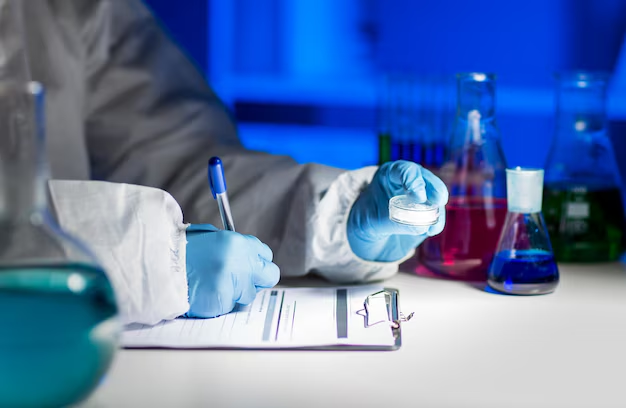
Bacteria testing is not just a regulatory hurdle; it is a critical diagnostic tool for any commercial operation. Unlike chemical tests, which often look for long-term health risks, bacteria tests (such as total coliform and E. coli analysis) screen for immediate, acute health threats.
- The Indicator Approach: Labs don’t usually test for every possible pathogen. Instead, they test for “indicator organisms.” The presence of total coliform bacteria in your water is a warning sign that the integrity of your plumbing has been breached, providing a potential pathway for more dangerous pathogens like E. coli or Cryptosporidium.
- The Ice Machine Factor: If there is one place in a restaurant where bacteria are most likely to colonize, it is the ice machine. The combination of cold temperatures, moisture, and potential biofilm buildup makes these machines an ideal breeding ground if the incoming water quality is compromised.
The Connection to Infrastructure
As we’ve discussed in our look at urban plumbing and potability, older buildings are more prone to hidden infrastructure issues. If your restaurant is located in an older structure, you may have “micro-environments” where water sits in stagnant lines—especially in areas like bar sinks or infrequently used prep stations.
Bacteria thrive in stagnant water. If your restaurant has recently had plumbing work done, or if you are in a building that has seen significant renovations, you should prioritize bacteria testing. Construction can disturb old sediment and biofilms, releasing bacteria into your lines that were previously “stuck” to the pipe walls.
How to Protect Your Operation
Restaurants should move from a reactive posture to a proactive water management plan:
- Baseline Testing: If you haven’t done so, perform a comprehensive test that includes a biological component. Know what your water looks like at the “point of use” (the kitchen sink, the ice machine, and the soda fountain) rather than just the service entrance.
- Filter Maintenance: Many restaurants use filtration for flavor, but filters can also become a site for bacterial growth if not changed on a strict schedule. If a filter cartridge is left in for too long, it can become saturated with organic matter, turning it into a filter that actually adds bacteria to your water.
- Use Certified Labs: Don’t rely on simple DIY dip-strips for critical safety testing. Use a state-certified laboratory that can provide an official, defensible report. Our resources page can help you find labs that specialize in commercial water analysis.
The Bottom Line
For a restaurateur, the question isn’t just “Is my water potable?” It’s “Can I prove that my water is safe?” In the event of a health inspection or a customer concern, having a record of regular, clean water testing is a powerful indicator of your commitment to excellence.
If you are just beginning to build a water safety protocol, start by browsing our FAQ section to understand the common signs of microbial issues. For more deep dives into the science of what makes water potable and how to manage it in a commercial environment, keep up with our blog.
For professional guidance on managing water safety in food service, the FDA’s Food Code provides specific requirements for water supply and plumbing that every restaurant owner should be familiar with.
Does your restaurant currently have a scheduled maintenance program for your filtration systems, and do you include water-sample testing in your annual health and safety audit?