The word potable is often treated as shorthand for clear and drinkable, but professional evaluation is more disciplined than a visual impression. For households and commercial operators in NYC and North Jersey, the central issue is whether the water is appropriate for the ways it is actually used across private dwellings, offices, restaurants, gyms, and mixed-use sites. Homes and commercial properties use water differently, but both depend on suitability at the point of use.
A practical assessment combines three layers that are often discussed separately: the incoming supply, the internal water path, and the way people use each endpoint. Observations help define those layers, but controlled collection and qualified analysis are what turn them into evidence. The overview at Water Potability provides the broader foundation for relating source conditions, plumbing, standards, and intended use.
Apply the Same Safety Logic to Different Water Uses Across Household and Business Use
A household and a business may draw from the same public supply, yet their water-use patterns create different testing priorities. Homes center on drinking, cooking, bathing, infant preparation, and daily family exposure. Commercial properties may add high-volume food use, employee consumption, customer service, equipment protection, documentation, and downtime risk. The underlying scientific principles remain the same, but representative sample points and response timelines change.
In NYC and North Jersey, private dwellings, offices, restaurants, gyms, and mixed-use sites should not be forced into one standard template. A homeowner may need a focused kitchen and plumbing comparison, while a restaurant or office may require multiple operational endpoints and a written management plan. explains how urban plumbing can alter water after it enters a property. The comparison is useful because it prevents two mistakes: overcomplicating a small residence and under-scoping a high-use commercial system. The EPA primary drinking-water regulations supplies authoritative context for this part of the evaluation.
Build the Testing Scope Around Real Consumption Points Across Household and Business Use
In NYC and North Jersey, the most useful starting point is a water-use map in place of a laboratory shopping list. Private dwellings, offices, restaurants, gyms, and mixed-use sites can contain drinking taps, cooking taps, employee sinks, showers, ice equipment, filters, heaters, and outlets that sit unused for long periods. The people planning the work works best when it identifies who uses each outlet, how often it runs, whether water is consumed directly, and whether a treatment device sits between the building supply and the user.
That inventory helps households and commercial operators distinguish essential samples from interesting but low-value ones. A primary consumption point usually deserves priority, while a second location can test whether a finding follows the water through the building or home or remains local. Where the scope feels confusing, urban plumbing and potability guidance can show organize the meaning of potable water around actual use. A good plan also notes recent vacancies, seasonal closures, equipment changes, and complaints that occur only at particular times. The result is a sampling design that represents routine life instead of whichever faucet happened to be easiest to reach.
Build a Panel That Is Broad Enough but Not Random Across Household and Business Use
A potability panel should be selected from the source, property, users, and observed concerns. Municipal water, private wells, old the tested location water path, food-service equipment, and recently repaired systems do not create identical test needs. A narrow panel can miss the real question, but an indiscriminate list of analytes may increase cost without improving decisions. The goal is coverage that is technically justified and interpretable.
For private dwellings, offices, restaurants, gyms, and mixed-use sites, the scope may combine indicator bacteria with selected metals, minerals, general chemistry, and any contaminant suggested by source history or regulation. The CDC drinking-water health overview outlines major categories of drinking-water contaminants. provides a plain-language frame for potability standards. Before collecting, the laboratory should confirm bottle types, preservatives, holding times, method capability, and whether the requested panel is certified for the relevant purpose. That conversation is part of sound testing, not an administrative afterthought.
Protect the Microbiological Sample From Collection Error Across Household and Business Use
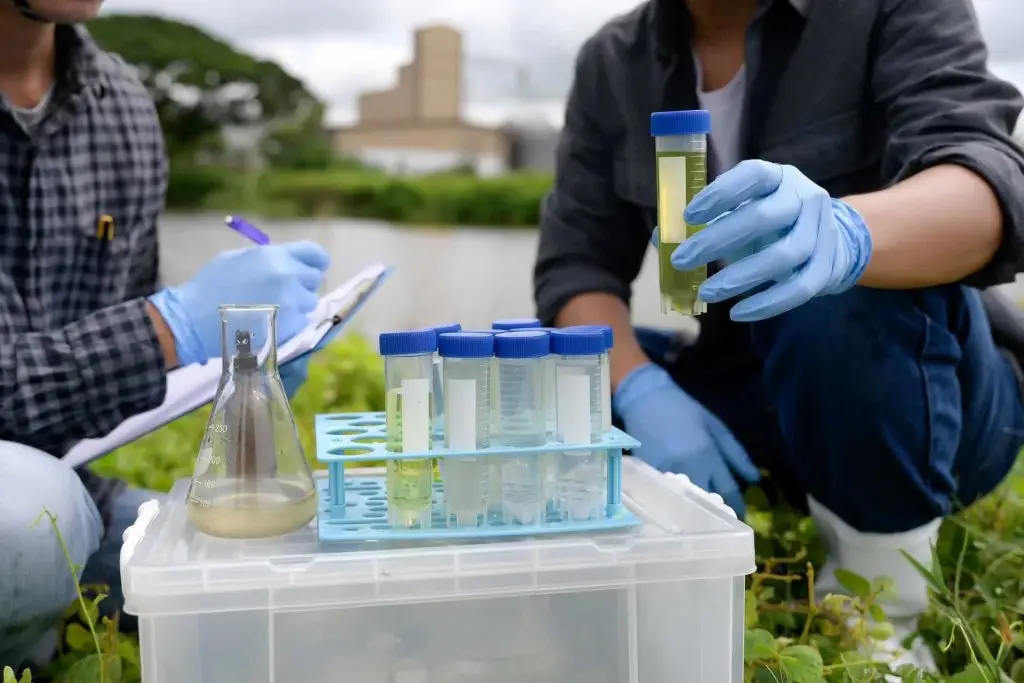
Microbiological testing is unusually sensitive to collection technique. A bottle intended for bacteriological analysis is not an ordinary sample container; it may contain a preservative, must remain closed until collection, and should not contact hands, sink surfaces, aerators, or unapproved disinfectants. The selected outlet matters as well. A rarely used faucet can reflect local stagnation, while a heavily used kitchen or service tap may better represent routine exposure. The test question should specify whether the goal is general potability, investigation of a particular outlet, or evaluation of a building-water condition.
Indicator organisms are used because testing every possible pathogen is neither practical nor necessary for routine screening. The explains the regulatory role of total coliform and E. coli in public-water monitoring. A detection is not interpreted by guesswork: sample integrity, repeat confirmation, source type, recent plumbing work, and nearby sanitary conditions all matter. For private dwellings, offices, restaurants, gyms, and mixed-use sites, the follow-up may include resampling, comparing upstream and downstream points, examining storage or low-use branches, and reviewing whether the collected bottle reached the laboratory within the required holding time. That disciplined sequence is what keeps bacteria in the discussion without turning one result into an unsupported story. Additional background is available in the Water Potability technical resources.
Treat Water as an Operational Input Across the Facility Across Household and Business Use
Commercial potability is inseparable from operations. Water may be consumed by staff, served to customers, incorporated into products, used for cleaning, or routed through equipment that is sensitive to scale and sediment. Occupancy schedules create additional variation: a busy weekday outlet may turn over water constantly, while a conference floor, seasonal tenant space, or back-room sink may remain stagnant. A facility map should therefore connect every sample to a business function and a consequence if that function is interrupted.
For private dwellings, offices, restaurants, gyms, and mixed-use sites, the testing plan must clearly identify critical endpoints, alternate water sources, and the time window in which a result must be available. The NSF/ANSI 61 drinking-water component standard emphasizes that water age, sediment, temperature, and disinfectant residual influence building-water conditions. Operators should combine laboratory findings with maintenance records for filters, heaters, ice machines, tanks, and seldom-used fixtures. That integration makes potability testing useful for continuity planning, not merely for responding after a complaint disrupts the workday.
Convert the Report Into a Ranked Response Across Household and Business Use
Laboratory numbers must be read against the method, reporting limit, applicable standard, and sample purpose. A non-detect does not mean the substance can never be present; it means it was not measured at or above the laboratory’s reporting level in that sample. A detected value does not automatically establish the source. The analyst and property decision-maker should ask whether the finding is health-based, aesthetic, operational, or diagnostic, and whether it is consistent across related samples.
For households and commercial operators, the lab report becomes actionable when findings are grouped into priorities. Microbiological indicators and regulated health parameters require one kind of response, while hardness, iron, manganese, or total dissolved solids may call for equipment, maintenance, or aesthetic decisions. An isolated endpoint result may justify fixture or branch investigation; a repeated pattern across the building may justify broader plumbing review. The offers the official standards context, but site-specific interpretation still depends on where the collected waters came from and what users need the water to do. Additional background is available in the Water Potability technical resources.
Choose Flushing, Repair, Treatment, or Monitoring for a Reason Across Household and Business Use
The response should be proportional to the evidence. Some findings call for prompt restriction of a specific use and professional follow-up; others support flushing, fixture maintenance, targeted repair, treatment evaluation, or scheduled monitoring. A broad and expensive system replacement is not automatically the best response to one anomalous sample, just as repeated adverse findings should not be dismissed because the water looks normal. The action plan is strongest when it identifies the responsible party, the affected outlets, and the condition that will trigger confirmation testing.
In NYC and North Jersey, responsibility can sit with a homeowner, tenant, building board, landlord, restaurant operator, or facility manager. Clear documentation helps those parties coordinate. Readers can consult when deciding how testing, plumbing work, and treatment fit together. The aim is not to produce the largest intervention; it is to make the smallest intervention that reliably addresses the demonstrated problem while preserving a record for future comparison.
A Data-Driven Potability Plan for NYC and North Jersey: Compare Decisions
For households and commercial operators in NYC and North Jersey, The final report is strongest when it remains connected to the physical water path. By pairing certified analysis with site notes and representative endpoints, owners and operators can protect users, avoid unnecessary work, and create a baseline that remains useful after occupancy, repairs, or equipment changes.